
Checking Criminal History in Lake County
Start by deciding what fact you need. Use the Colorado Bureau of Investigation for a statewide Colorado arrest-and-disposition history. Use the Fifth Judicial District clerk for filed charges, hearings, judgments, and certified copies. Ask Lake County Sheriff’s Records for an LCSO incident report, booking report, or local incarceration history. A Leadville Police Department narrative must come from LPD, while state prison status belongs to the Colorado Department of Corrections.
Gather a full legal name, date of birth, spelling variants, an approximate incident or filing year, and any case or booking number. Those details reduce false matches and help a clerk locate an older paper file.
- Define the exact record and identify its custodian.
- Search the appropriate official state or court channel with the strongest identifiers available.
- Compare names, birth data, dates, agencies, and case numbers before treating a result as a match.
- Request the underlying agency, booking, or court document rather than relying only on an index.
- Order a certified disposition or fingerprint-based personal review when identity or final outcome matters.
Lake County's Harrison Avenue Custodians
Several record keepers sit close together in Leadville, but their files never merge merely because their counters are nearby. The Lake County trial-court page identifies the clerk route for District and County Court files. County government, the Sheriff’s Office, and Detention Division operate from 505 Harrison Avenue. Leadville City Hall and Municipal Court are at 800 Harrison Avenue.
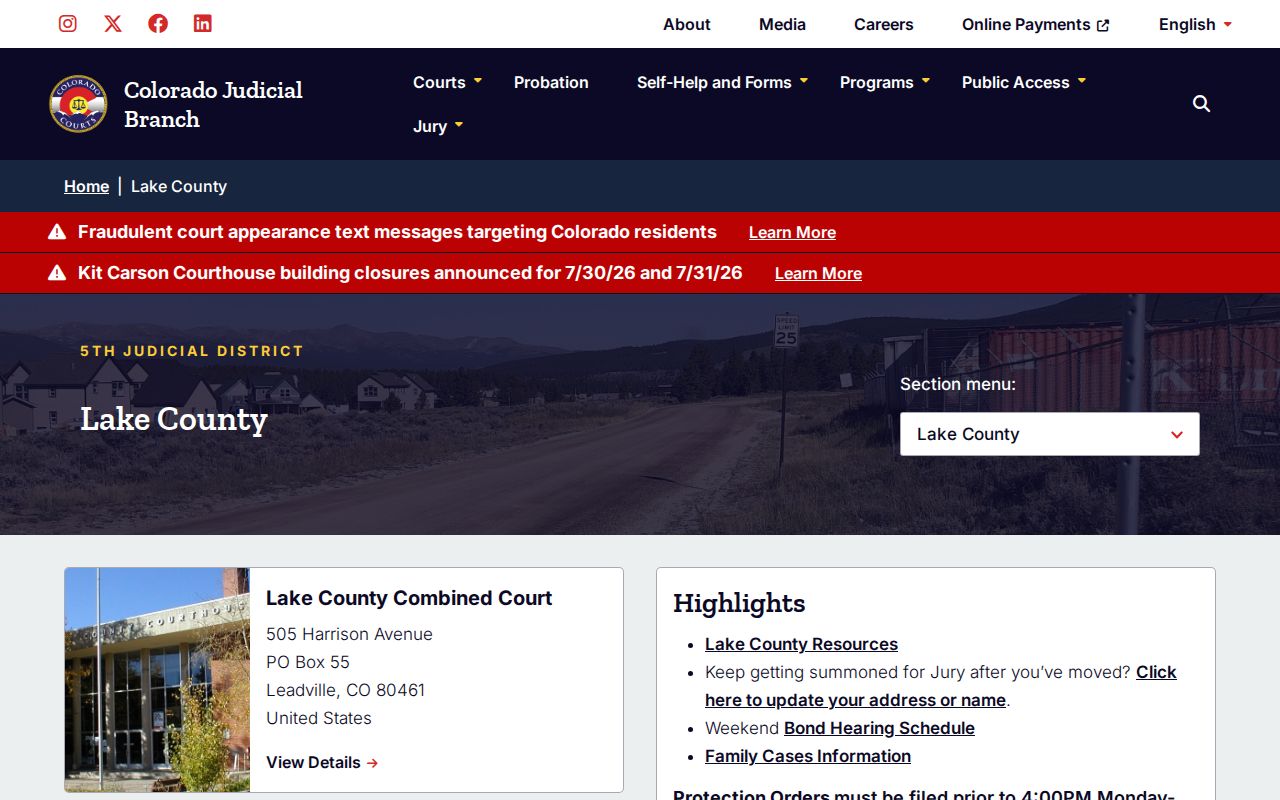
The image reinforces a key rule: ask the Judicial Branch for pleadings and orders, the sheriff for LCSO and booking products, and the city for LPD or municipal records. An LPD file sent for prosecution may instead require the Fifth Judicial District Attorney.
Lake County Courts
505 Harrison Ave., Leadville, CO 80461
District Court felony files and County Court misdemeanor, traffic, and early felony proceedings.
Sheriff's Records
505 Harrison Ave., Leadville, CO 80461
719-486-1249
Monday through Friday, 8 a.m.–noon and 1–4:30 p.m.
Leadville Municipal Court
800 Harrison Ave., Leadville, CO 80461
719-656-0637
City ordinance and citation matters.
Colorado Official Background Checks
The Colorado Bureau of Investigation records hub explains the state repository’s criminal-history services. Its public Internet Criminal History Check, or ICHC, uses a name and date of birth. It covers Colorado information reported to CBI, not a complete national file, local police narrative, or every court document. Sealed arrests and protected juvenile material are among the public exclusions.
A fingerprint-based personal review is stronger when someone is checking their own identity-linked record or correcting a mistaken match. Colorado approves Colorado Fingerprinting and IdentoGO for authorized submissions. Lake County’s older sheriff schedule lists local fingerprint services, but residents should call first to confirm availability and whether the prints can be used for their stated purpose.
For a subject-only national review, the FBI Identity History Summary requires fingerprints and an $18 FBI fee. It still does not replace a Lake County police report or court file.
Avoiding Wrong Lake County ICHC Matches
ICHC charges for each downloadable matching result, so a common name can create both uncertainty and added cost. Enter the most complete identifiers available. Then compare middle names or initials, date of birth, physical details, known counties, and arresting agencies. A name-based result is a candidate match, not fingerprint confirmation.
The official ICHC search application is the transaction point.
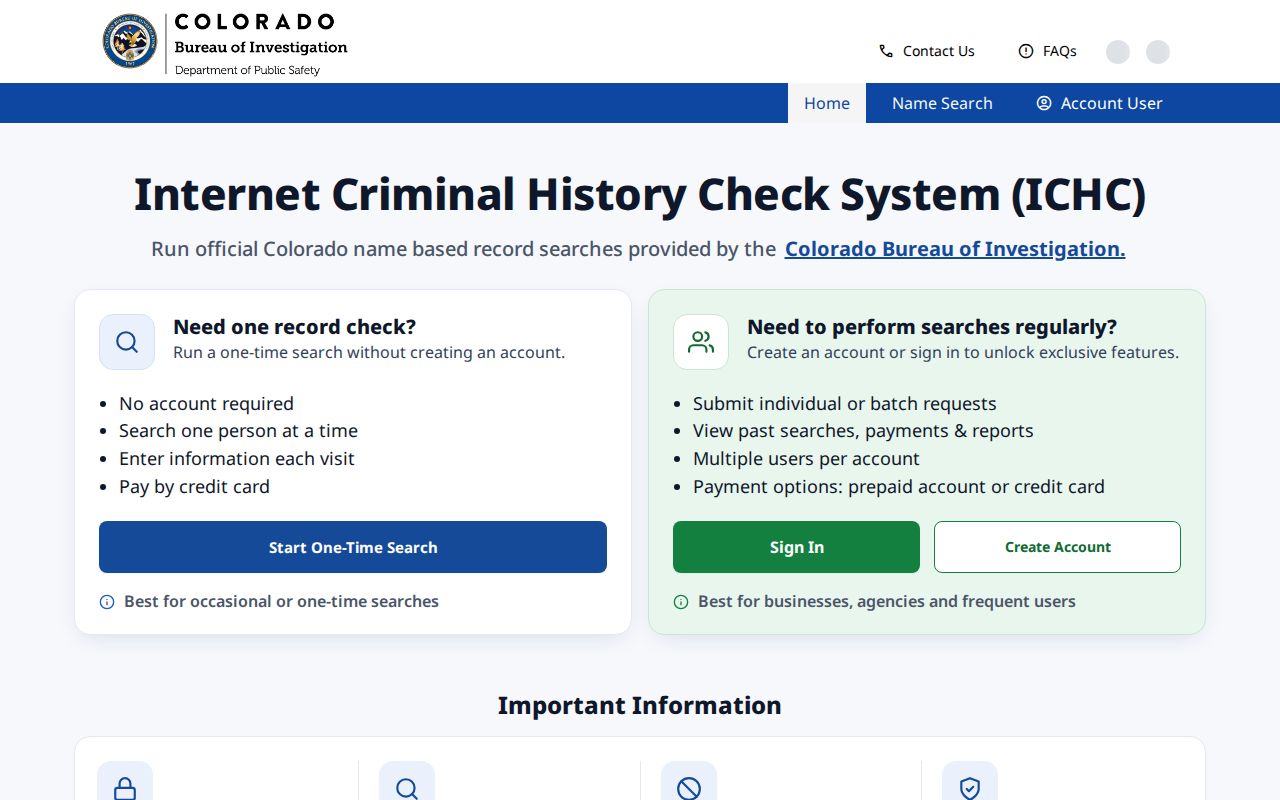
Its core fields are simple, but the meaning of the result is not. An absent result does not rule out an out-of-state, federal, municipal, unreported, or sealed event. When reviewing one’s own record and identity is uncertain, use the fingerprint-based process.
| Field | Use | Search note |
|---|---|---|
| First name | Name search | Try documented spelling variants where appropriate. |
| Last name | Core identifier | Confirm aliases rather than assuming a broad match. |
| Date of birth | Primary discriminator | Use MM/DD/YYYY and verify it before purchase. |
| Search/Continue | Returns candidates | A separate charge can apply to each downloaded match. |
Note: ICHC cannot be notarized; CBI identifies a separate Individual Public Request by Name and Date of Birth for a notarized product.
Lake County Criminal Record Types
“Criminal record” can describe several documents created at different stages. Choosing the right type prevents a request from landing at an office that cannot answer it.
- Incident or arrest report
- An LCSO or LPD narrative describing the event and officer action. It is not proof of guilt.
- Booking record
- Lake County Detention intake data, including the booked charge, bond or hold, and release or transfer facts.
- Court case file
- The complaint or information, motions, hearings, orders, plea or verdict, judgment, and sentence.
- CHRI
- Fingerprint-linked criminal history record information containing reported arrest cycles and dispositions held by CBI.
- Warrant
- A court command to arrest or bring a person before the court. Safe confirmation requires the issuing court or law enforcement.
- Registry or corrections record
- A purpose-specific public record, not a substitute for a general criminal-history file.
Probation is administered through Fifth Judicial District Probation, while parole decisions belong to the Colorado State Board of Parole and supervision to CDOC Adult Parole. Neither is a general Lake County public roster. Police crash reports also remain with the agency that investigated them.
Lake County's 48-Hour Detention Rule
The county jail’s short-term model changes how custody searches work. The official Lake County Detentions page says detainees are held while awaiting advisement or bail, then transported to another facility when confinement must exceed 48 hours.
Lake County publishes no official live inmate roster. Call Detentions at 719-486-4185 and ask whether the person was released or transported, the destination agency, and the booking identifier needed there. The sheriff’s form offers a $6 date-specific booking report and a $6 Lake County incarceration history covering the first ten pages. Leaving the booking date blank requests the most current booking report.
VINE may add custody notifications, but its result depends on participating agency feeds. A transfer can require a new search at the receiving jail. Court orders and direct custodian confirmation remain controlling.
Custody pointer: A person missing from Lake County Detention may have been transferred, not released. Confirm the destination before sending mail, money, or visitation requests.
Inside a Lake County Criminal Record
A CBI CHRI groups identifying data with fingerprint-linked arrest cycles. A court record adds the formal prosecution and outcome. Read both in context, since a booking charge can change when the district attorney files, amends, or declines a count.
| Name & identifiers | Reported name and demographic data used to distinguish the subject; product fields vary. |
|---|---|
| Arrest data | Arrest date, agency, and fingerprint transaction or tracking information. |
| Charges | Descriptions, statute citations, and levels as reported at that stage. |
| Disposition | Court, case reference, outcome, and date when transmitted and matched. |
| Sentence | Confinement or probation terms as reported; a CDOC sentence entry is not a new arrest. |
| Notices and gaps | A registered-sex-offender notation may appear, while narratives, most pleadings, federal history, and sealed data do not. |
An arrest cycle without a disposition does not establish a conviction. Compare it with the certified Lake County court outcome. CBI provides a disposition-update and challenge process when the repository entry is incomplete or tied to the wrong identity.
Lake County Sheriff's Records Menu
Sheriff’s Administration releases only records maintained by LCSO. The Sheriff’s Records page publishes hours, its request route, and product prices. Requests can be emailed to Records@lakecountyso.org or delivered as the office directs. The lunch closure from noon to 1 p.m. matters for walk-ins.
Name the exact component sought. Checking “Criminal Case Report” may not include dispatch audio, video, photos, a booking report, mugshot, or incarceration history. Include the case number if known, incident date and location, involved names and roles, arrest date, desired media, and a cost ceiling.
| Lake County record | Published charge | Key limit |
|---|---|---|
| Case or dispatch report | $6 first 10 pages; 25¢ each extra | Archived or lengthy work may add research time. |
| Booking report | $6 | Date-specific; blank date returns the most current report. |
| Incarceration history | $6 first 10 pages; 25¢ each extra | Lake County jail bookings only. |
| Booking photograph | $5 each | A separate product from the booking report. |
| Audio or video | $25 first hour including CD | Added research is $20 per hour. |
| Color photograph | $1 each | Release and redaction rules still apply. |
Active investigations, juvenile files, victim identifiers, medical details, and security-sensitive material may be withheld or redacted. Ask for the statutory basis when a record or portion is denied.
Public Access Laws in Colorado
The Colorado Criminal Justice Records Act, or CCJRA, governs criminal justice records. The Colorado Open Records Act covers other public records where appropriate. Public access is not unrestricted republication, and a custodian may need to balance investigation status, privacy, child or victim protection, and the public interest.
Key Colorado laws:
C.R.S. 24-72-301 through 309 defines and governs access to criminal justice records.
C.R.S. 24-72-303 addresses inspection of records of official actions and related access rules.
C.R.S. 24-72-304 addresses custodian authority, withholding, and access considerations.
C.R.S. 24-72-305.5 restricts certain commercial uses of booking photographs.
HB24-1090 strengthened protection of identifying information for specified child and sexual-offense victims.
A precise request should identify the custodian, date range, people, incident or case number, and documents wanted. Ask for an estimate before extensive research. “No responsive record,” “not maintained here,” “withheld,” “sealed,” and “not enough detail” are different answers and call for different next steps.
Lake County Charges Change by Stage
A local record moves through several custodians: LCSO or LPD report → Lake County booking → Fifth Judicial District Attorney filing decision → County or District Court case → CBI disposition update. Each step has its own timestamp. A booked charge is the allegation received at intake, while the prosecutor may file a different charge, amend a count, or decline prosecution.
The court’s signed disposition is the best evidence of outcome. If the court shows dismissal, acquittal, deferred judgment, or conviction but CBI does not, obtain a certified disposition and follow the CBI update instructions. Do not ask the court clerk to interpret legal effect; clerks provide records and procedural information.
Lake County District Court hears felonies. County Court hears misdemeanors and traffic matters and handles early felony steps. Leadville Municipal Court keeps city ordinance and citation files separately, with no public municipal name-search portal found in the research.
Sealed, Expunged, and Restricted Records
Colorado primarily uses sealing for adult criminal justice records and expungement for specified juvenile records. Title 24, Article 72, Part 7 includes automatic and petition routes for qualifying arrests, non-convictions, convictions, municipal convictions, and certain multiple-conviction records. Eligibility depends on the case, offense, dates, waiting rules, and exclusions.
HB21-1214 created automatic sealing rules for qualifying arrests without charges, and SB22-099 expanded and streamlined automatic sealing. Crimes of violence, many sexual offenses, and other listed cases may be excluded or treated differently. Juvenile expungement proceeds under a separate statute.
For a Lake County matter, identify every case and disposition, get the current Colorado Judicial Branch form packet, check whether automatic sealing has occurred, and file in the court that holds the record when a petition is required. After an order enters, confirm that CBI and each custodian processed it. A sealed record still exists for legally authorized uses even when public searches no longer show it.
Lake County's Mining-Era Archives
Leadville’s nineteenth-century mining boom left a record history much older than today’s online systems. The official Lake County government directory is the starting point for identifying a present-day county department before asking about older material.
Modern files may be electronic, while old court registers, sheriff material, and municipal records can require staff retrieval. The county’s historic Harrison Avenue setting makes those sources physically close but does not change legal custody.
Archived or lengthy sheriff research is billed at $20 per hour in half-hour increments after any applicable free first hour. Older court files may require a clerk-assisted archive request and separate copy or certification charges. Give a narrow year range, complete case number when possible, exact document names, and a cost ceiling. Winter weather and mountain travel can affect an in-person records day, so confirm hours and closures with the correct counter before leaving.
Reading Lake County Crime Counts
Official crime statistics require careful labels in a small county. The FBI Crime Data Explorer lets a researcher filter separately for Lake County Sheriff’s Office and Leadville Police Department and choose a year and data type.
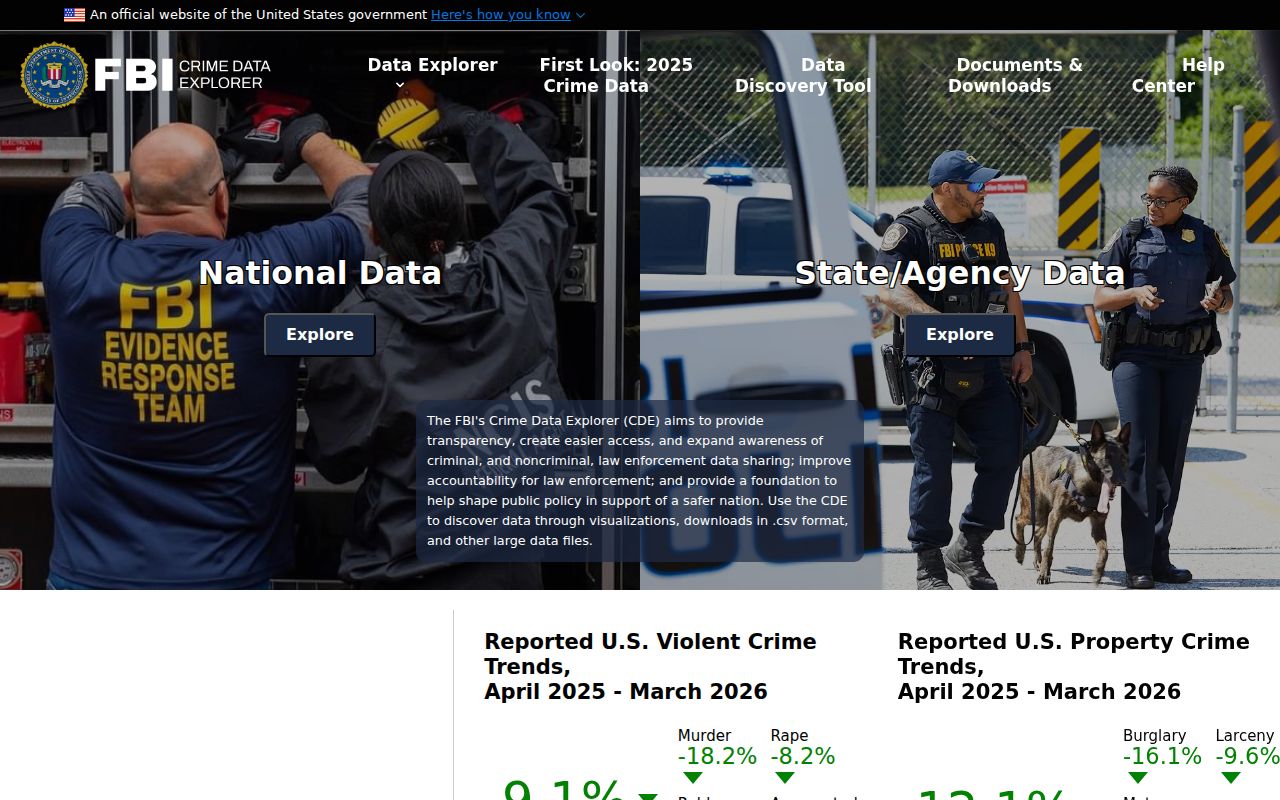
The dashboard should be read as context, not as a person-search tool. State whether a figure counts incidents, offenses, arrests, or people and note reporting coverage. The 2020 Census counted 7,436 Lake County residents and 2,633 Leadville residents, so a small change in raw events can swing a per-capita rate sharply. Multi-year raw counts are more useful than a one-year ranking. Colorado’s Office of Research and Statistics supplies a second official comparison source.
Lake County Criminal Records by City
Leadville is Lake County’s only incorporated municipality. Its police department creates city incident reports, its Municipal Court holds city ordinance and citation files, and Lake County Detention handles bookings. Unincorporated Twin Lakes does not have a separate city police department or municipal court, so it does not receive a city records page.
Leadville Criminal Records
2,633 residents in the 2020 Census · LPD reports, Municipal Court records, and county booking routes.
The Leadville Criminal Records page explains the city’s online police request form, Municipal Court contact channels, Fifth District handoff, and short-term county booking arrangement.